
Cotton
Types of Cotton Sheets: Decode the Label Before You Buy
You have three sheet sets open in different tabs. One sells you Egyptian cotton. Another promises percale. The third leads with organic. You are being asked to compare an origin, a weave and a growing method as though they answer the same question.
The easiest way through is to sort the words before comparing the products. Start with what the cloth contains and how it is made. Then ask whether its surface, fit and care suit you. A longer product name should not win by default.
Our view: the best label is the one that leaves you with fewer unanswered questions. Here is how to read it, with actual retail examples rather than a ranking of sheets we have not slept on.
Put each word in the right drawer
These categories can coexist. A sheet can be Egyptian cotton and percale; it can be organic cotton and sateen. Choose the construction you want, then assess the fibre and other specifications within it.

- Cotton percentage tells you the fibre composition. A cotton blend needs the other fibres and their proportions too.
- Long staple or extra long staple describes fibre length. Egyptian describes origin; that word alone does not establish a particular fibre length or finished feel. Supima is the trademark for American-grown extra long staple cotton.
- Organic concerns how the cotton is grown. It does not select a weave for you.
CottonWorks’ home buyer’s guide separates these fibre terms from fabric construction and finishing. Combed belongs to preparation: combing removes shorter fibres before spinning, as its spinning guide explains. It does not mean the finished cloth is percale or sateen.
Percale and sateen answer a different question
These names describe how yarns cross. Percale uses a plain weave: over one yarn, under the next, with the sequence alternating. Sateen uses longer yarn floats across the fabric’s face, with binding points spaced through the repeat. The difference helps explain why sateen can have a smoother, more lustrous face. CottonWorks illustrates the underlying weave structures.

Jersey takes another route. It is knitted from loops rather than woven with crossing yarns. CottonWorks’ knit guide explains the loop structure and flexibility. Check the fibre label separately: the word jersey does not establish cotton content.
Keep the language of feel personal. “Crisp” can sound inviting to one sleeper and stiff to another. “Smooth” may be your priority, or you may prefer a more textured surface. Those preferences are worth identifying before a retailer tells you which finish counts as luxury.
In Katie Golde’s percale and sateen comparison for Mattress Clarity, handling the cloth gives the explanation a physical reference. A video can help you work out what to inspect in a shop or swatch; it cannot tell you how every fabric will feel on your skin. Yarn, construction and finishing still vary within each category.
Read three real product descriptions this way
The following are manufacturer-stated specifications checked on 1 October 2026. They illustrate how to read a listing. They are not a hands-on comparison, a durability test or a recommendation based on thread count.
Brooklinen Classic Percale
The Classic Percale listing states 100% long-staple cotton percale and 270 thread count. That gives you composition, fibre information, weave and a count. Put each fact in its own row before comparing it with another set.
Brooklinen Luxe Sateen
The Luxe Sateen listing states 100% long-staple cotton sateen and 480 thread count. The weave has changed as well as the number. Treating 480 as a score that defeats 270 skips the question you actually need answered: which surface do you want?
L.L.Bean Ultrasoft Comfort Flannel
L.L.Bean’s Canadian listing specifies 100% brushed cotton flannel and a 5 oz. weight. “Brushed” describes a surface treatment. The weight is a different measurement from thread count; five is not a smaller score in the same contest. Use flannel examples to compare flannel, and inspect the surface you will actually sleep against.
These listings also show why a spreadsheet with one “quality” column is too crude. Keep composition, construction and measurement separate. If a relevant detail is missing, ask the retailer. An unstated detail is an unanswered question, not proof of a poor product.
Let the photograph answer the design question

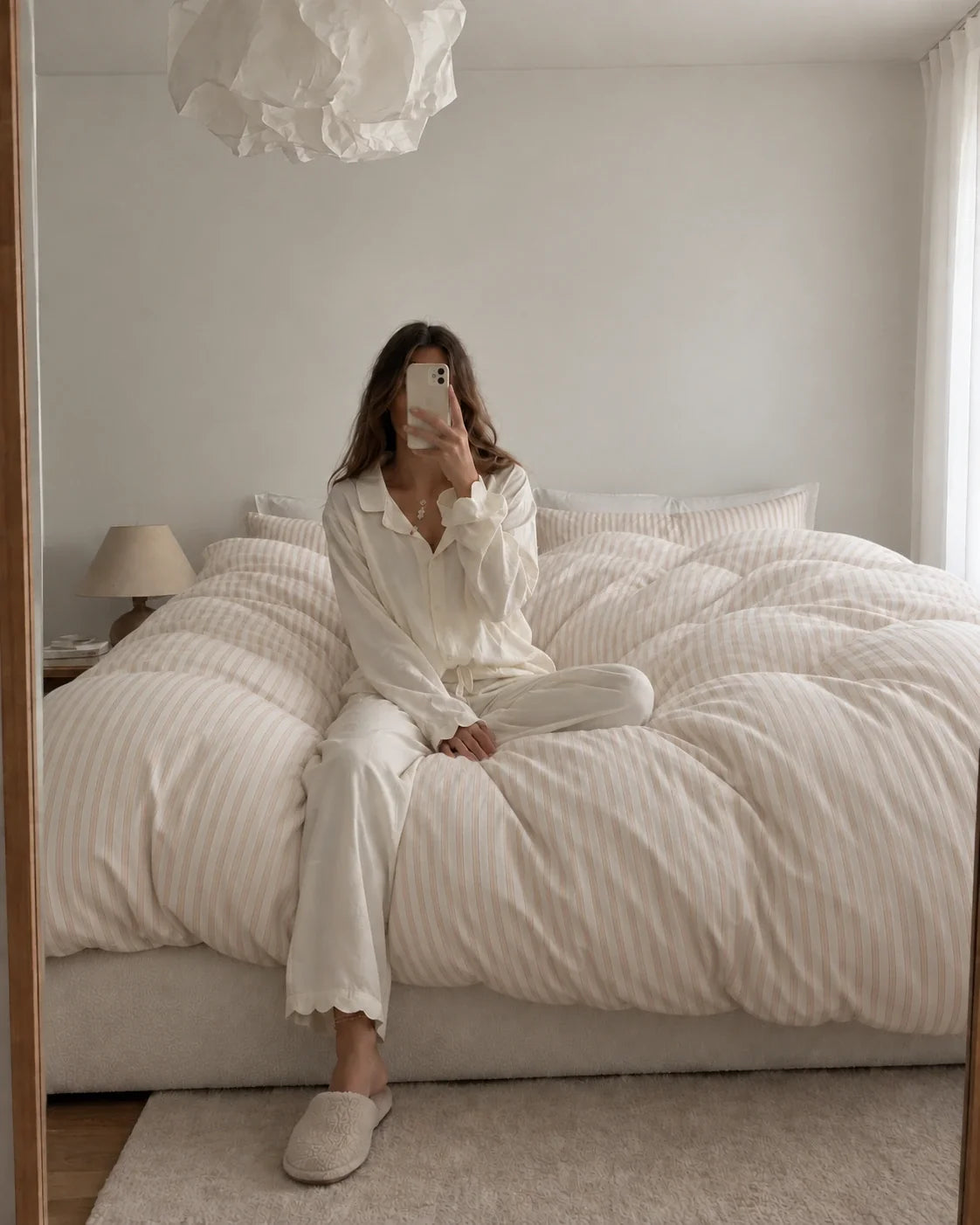
A beautiful bedroom photograph can tell you what you love: narrow stripes, a broad check, a rumpled surface, a little sheen. Save that observation as your design brief, then read the fabric details separately. You can look for the same visual rhythm in a construction you prefer.
For this pictured mix, the useful starting point is a shared cream and dark palette with visibly different pattern sizes. Our bedding pattern guide develops that design decision. Neither the photograph nor its colour scheme is evidence that a sheet will sleep cooler.
Make a shortlist you can actually use
Copy these four prompts into a note for each candidate. They are questions to take shopping, not a quiz with a winning brand.
- The surface I want: what feels appealing about it, and what would annoy me?
- The label I can verify: composition, construction, preparation or finish, plus any count or weight stated.
- The fit I need: actual sheet dimensions, fitted-pocket depth if relevant, and the sizes of my mattress and pillows.
- The routine I can keep: the exact care instructions and the return terms if the feel disappoints me.
Use dimensions even when the size name looks familiar, particularly when shopping across the US, Canada, the UK and Australia. Check the local retailer’s listing, delivery availability and terms; these examples do not establish availability in all four markets.
If your current sheets already feel right, read their label before replacing them. You may have a more useful starting point in the cupboard than in another ten open tabs.
YumeRest is YumeFeel’s bedding journal. This guide explains textile labels using industry references and brand-stated examples. We have not tested the featured sheet sets. CottonWorks is Cotton Incorporated’s industry education resource; creator and retailer claims are not treated as independent proof of superiority. H&M HOME’s photograph is an editorial design reference, not an endorsement of YumeFeel.


